No Time to Read the Blog Post? Listen to the Podcast
The New Era of Customer Connections
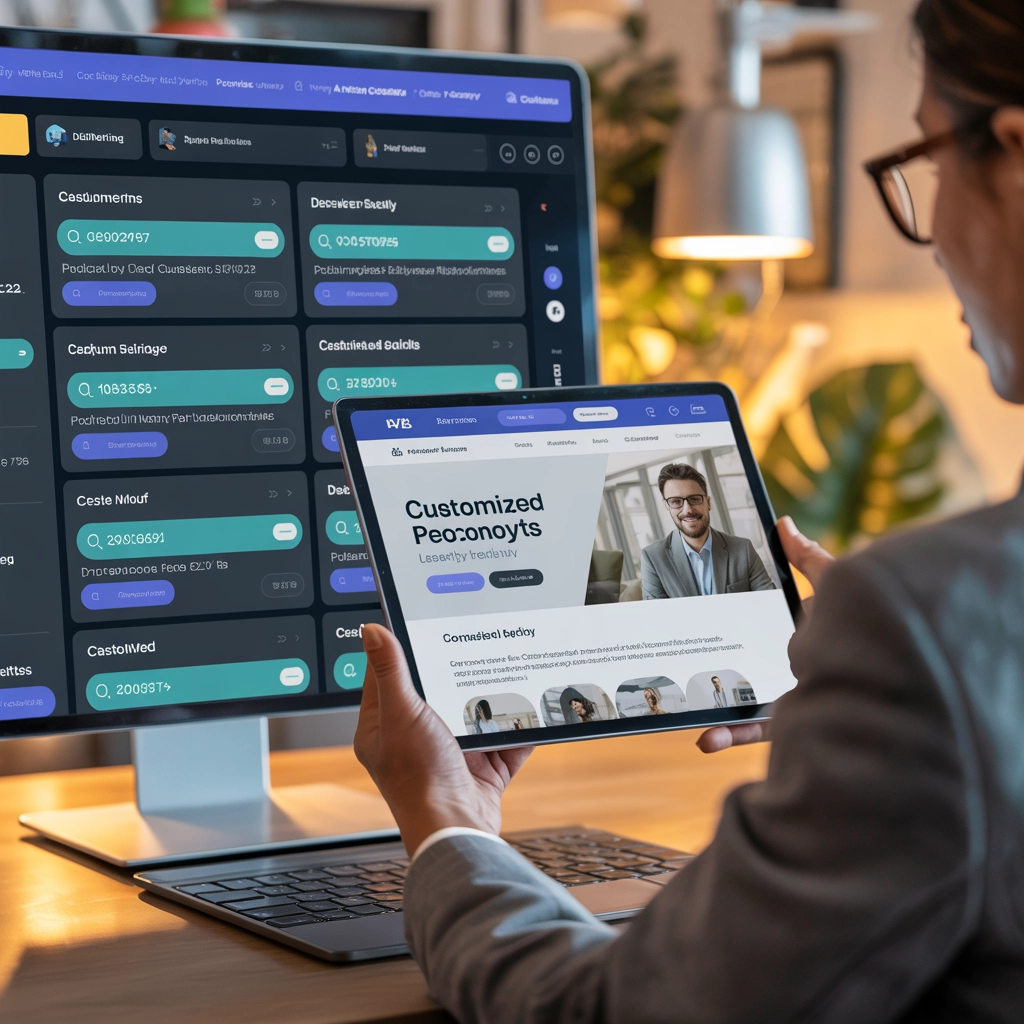
Remember when adding a customer’s first name to an email was considered a form of “personalized marketing”? Those days are long gone. In 2025, true personalization means delivering exactly the right message, with the right offer, at the perfect moment, and doing it consistently across thousands or even millions of customer interactions.
Welcome to personalization at scale. The approach that’s transforming how businesses connect with their ideal clients. Today’s consumers not only appreciate personalization, but they also demand it. Research shows that 71% of customers expect companies to deliver personalized interactions, and 76% get frustrated when businesses fail to meet this expectation.
But here’s the challenge: how do you make each customer feel like you’re speaking directly to them when you have thousands of prospects in your pipeline? The answer lies in leveraging new technologies that make mass personalization not just possible, but practical and profitable.
Why Personalization Matters More Than Ever
The digital landscape has never been more crowded. Your potential clients are bombarded with approximately 4,000 to 10,000 ads daily. Generic marketing messages simply fade into the background noise. To capture attention in this environment, relevance isn’t just helpful, it’s essential.
Consider these compelling statistics:
- Personalized emails deliver 6X higher transaction rates
- 80% of consumers are more likely to purchase from brands that offer personalized experiences
- Companies using advanced personalization see revenue increases of 10 – 15%
“The brands that will win in the next decade are those that recognize each customer as an individual with unique preferences, behaviors, and needs,” says Michael Brenner, CEO of Marketing Insider Group. “Personalization at scale isn’t just a marketing tactic, it’s a fundamental business strategy.”
The good news? The technology to achieve this level of personalization is more accessible than ever before.
The Building Blocks: Data Collection and Unification
Effective personalization begins with the correct data, organized in the most effective way.
Types of Data That Power Personalization
- Demographic data: Basic information about who your customers are
- Behavioral data: How they interact with your digital properties
- Contextual data: When, where, and how they engage with your brand
- Transactional data: Their purchase history and patterns
- Preference data: Explicitly stated preferences and interests
The challenge isn’t just collecting this information; it’s unifying it into a comprehensive customer view. This is where Customer Data Platforms (CDPs) come in, creating a single source of truth about each customer that can power personalization across channels.
Privacy First Data Collection
In 2025, responsible data collection is non negotiable. With regulations such as GDPR and CCPA, as well as newer privacy frameworks, transparent data practices are essential. Always prioritize:
- Clear consent mechanisms
- Value exchange (offering something worthwhile in exchange for data)
- Data minimization (collecting only what you need)
- Transparent privacy policies

The Technology Stack: Tools That Enable Personalization at Scale
Modern personalization requires a sophisticated tech stack. Here are the key components:
1. Customer Data Platforms (CDPs)
CDPs serve as the central nervous system of your personalization efforts, unifying data from multiple sources to create comprehensive customer profiles. They provide the foundation for segmentation, targeting, and personalized messaging.
2. Artificial Intelligence and Machine Learning
AI and ML analyze patterns in customer behavior to predict future actions and preferences. These technologies power:
- Predictive analytics: Anticipating customer needs before they express them
- Content recommendations: Suggesting relevant products, articles, or offers
- Dynamic pricing: Optimizing offers based on customer value and behavior
- Smart segmentation: Creating micro segments based on complex behavioral patterns
At Mixed Media Ventures, we’ve seen firsthand how AI powered personalization can transform customer engagement. Our Voice AI solutions enable businesses to create hyper personalized interactions that foster meaningful connections.
3. Marketing Automation Platforms
These platforms execute personalized campaigns across channels, automating the delivery of tailored content based on triggers, segments, and customer journey stages.
4. Content Management Systems with Dynamic Content Capabilities
Modern CMSs allow for content variations that can be served to different audience segments based on their profiles, behaviors, or context.
5. Testing and Optimization Tools
A/B and multivariate testing platforms help refine personalization strategies by measuring which approaches drive the best results for different segments.
Implementation Strategies: Starting Smart and Scaling Up
Personalization at scale doesn’t happen overnight. Here’s a strategic approach to implementation:
1. Begin with High Impact, Low Complexity Use Cases
Start with personalization initiatives that offer significant value while requiring minimal technical complexity:
- Personalized email subject lines and content
- Website homepage customization based on referral source
- Retargeting ads featuring previously viewed products
- Personalized recommendations based on purchase history
2. Create a Cross Functional Personalization Team
Effective personalization requires collaboration across departments:
- Marketing: Strategy and campaign execution
- IT/Development: Technical implementation
- Data Science: Analytics and insights
- Customer Service: Feedback and frontline insights
3. Implement a Testing Framework
Develop a systematic approach to testing personalization tactics:
- Define clear success metrics
- Test one variable at a time
- Allocate sufficient sample sizes
- Document learnings for future initiatives
4. Scale Gradually and Sustainably
As you demonstrate success with initial personalization efforts, expand to more complex use cases:
- Omnichannel personalization across web, email, mobile, and in store
- Predictive personalization based on AI insights
- Real time personalization triggered by immediate behaviors
- Lifetime value based personalization strategies
Real World Applications: Personalization Success Stories
E commerce: The Product Recommendation Revolution
Online retailers are using AI powered recommendation engines to create personalized shopping experiences that rival in store service. By analyzing browsing patterns, purchase history, and similar customer behaviors, these systems can predict what products a customer is most likely to purchase.
One leading fashion retailer implemented a personalization strategy that included:
- Personalized homepage content based on browsing history
- Tailored email campaigns featuring items related to recent views
- Push notifications for price drops on wishlist items
- Size and style recommendations based on previous purchases
The result? A 35% increase in average order value and a 28% improvement in customer retention.
B2B: Account Based Personalization
B2B companies are leveraging personalization to target high value accounts with tailored content and experiences. Our lead generation services help B2B clients develop personalized journeys for target accounts, tailored to their industry, company size, and buying stage.
A technology services firm implemented account based personalization that included:
- Industry specific landing pages
- Personalized case studies matching prospect challenges
- Custom demo experiences based on company size and needs
- Tailored outreach sequences for different stakeholder roles
This approach generated a 45% increase in qualified leads and shortened sales cycles by an average of 20%.
Service Businesses: Contextual Engagement
Service providers are utilizing contextual data to deliver highly targeted, relevant communications. For example, a financial services firm implemented a personalization strategy that included:
- Life event triggers (marriage, home purchase, etc.) for targeted offers
- Behavior based educational content
- Service recommendations based on account activity
- Personalized financial guidance based on portfolio performance
This approach increased client engagement by 40% and boosted cross selling success by 25%.
Overcoming Common Challenges
Data Silos and Integration Issues
Challenge: Data trapped in disconnected systems makes unified personalization difficult.
Solution: Implement a CDP or integration layer that connects disparate data sources to facilitate seamless data integration. Our digital marketing services include data integration strategies that create a unified view of your customers.
Balancing Personalization with Privacy
Challenge: Creating personalized experiences while respecting privacy boundaries.
Solution: Adopt transparent data practices, clearly communicate value exchanges, and use aggregate and anonymized data where appropriate.
Content Creation at Scale
Challenge: Producing enough content variations to support personalization initiatives.
Solution: Leverage modular content approaches, AI assisted content creation, and prioritize high impact content segments.
Measuring Personalization ROI
Challenge: Determining the specific impact of personalization efforts.
Solution: Implement controlled experiments, track incremental lift metrics, and measure long term customer value changes.

Future Trends: What’s Next in Personalization
Predictive Personalization
AI systems will increasingly anticipate customer needs before they’re expressed, enabling proactive personalization that feels almost prescient.
Emotional Intelligence in Personalization
Advanced sentiment analysis will enable brands to tailor their messaging not only to behavior, but also to the customer’s emotional state and context.
Augmented Reality Personalization
AR experiences will become increasingly personalized, allowing customers to visualize products in their own environments with customized features and options.
Voice First Personalization
As voice interfaces become more prevalent, personalization will adapt to conversational contexts, with voice AI solutions providing tailored responses based on user history and preferences.
Making Personalization Your Competitive Advantage
Personalization at scale is no longer a luxury; it’s a business imperative. The brands that succeed in 2025 and beyond will be those that deliver relevant, valuable, and timely experiences to each customer, regardless of how large their audience grows.
The technology exists today to make this possible. The question isn’t whether you can afford to implement personalization at scale, but whether you can afford not to.
At Mixed Media Ventures, we help businesses implement personalization strategies that drive measurable results. From AI powered chatbots to comprehensive digital marketing solutions, we provide the expertise and technology to help you speak directly to your ideal clients at any scale.
Ready to transform how you connect with your customers? Contact us today to learn how personalization at scale can become your competitive advantage.