
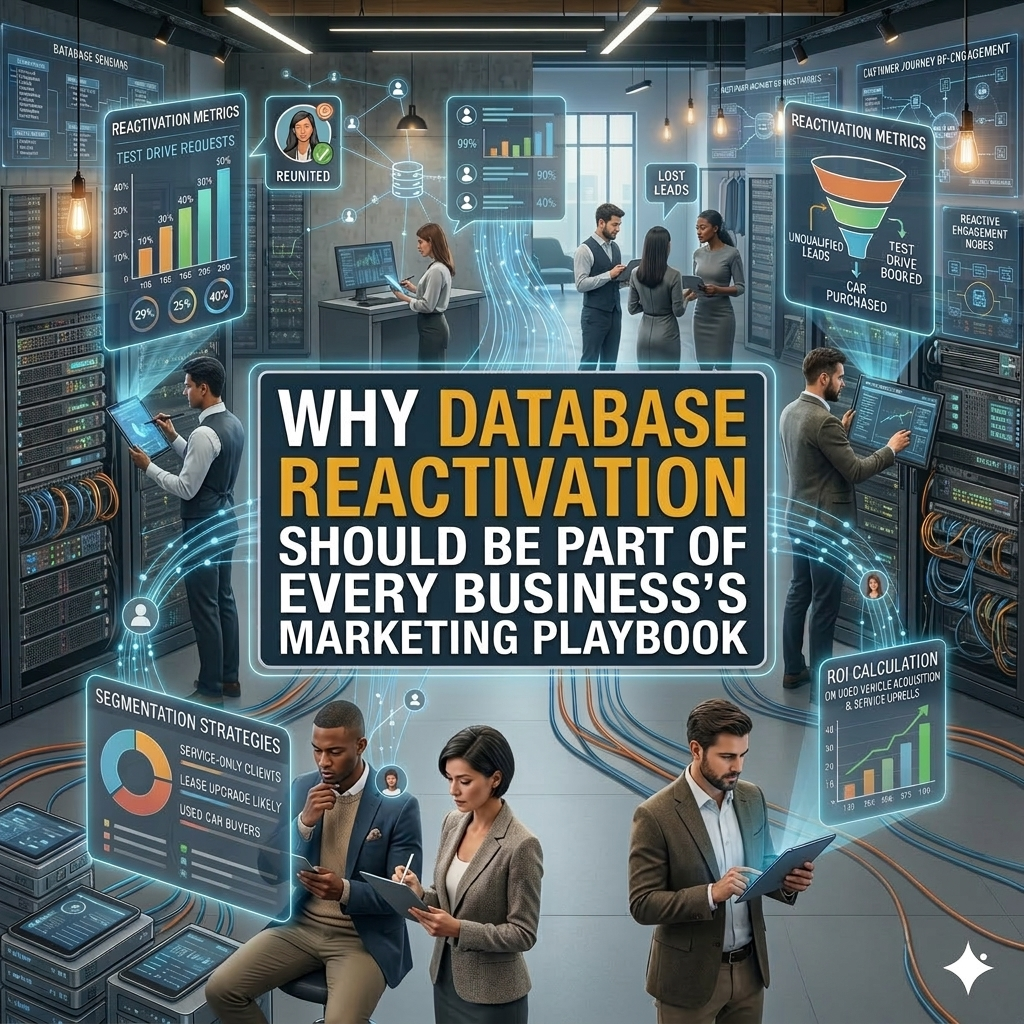
The Hidden Gold Mine in Your CRM
Every business has them: those once enthusiastic customers who gradually fade away, prospects who initially showed interest but never converted, or former clients who simply stop engaging. They sit in your database, forgotten and untapped. But what if I told you that this dormant segment represents one of your most valuable marketing assets?
Database reactivation isn’t just another marketing buzzword; it’s a strategic approach that can transform your business’s bottom line with remarkable efficiency. At Mixed Media Ventures, we’ve seen firsthand how companies that implement thoughtful reactivation strategies outperform those focused solely on new customer acquisition.
In today’s competitive landscape, where customer acquisition costs continue to rise, the ability to reconnect with already familiar contacts isn’t just smart; it’s essential for sustainable growth. Let’s explore why database reactivation deserves a prime spot in your marketing playbook and how you can implement it effectively.
The Dormant Database: Understanding What You’re Missing
Before diving into strategies, it’s crucial to understand what constitutes a dormant contact. These are individuals or companies who have previously engaged with your business but haven’t taken any meaningful action in a specific timeframe. Depending on your industry, this could mean:
- Customers who haven’t made a purchase in 6 12 months
- Subscribers who haven’t opened your emails in 90+ days
- Users who created accounts but haven’t logged in recently
- Leads who initially engaged but never converted
The reasons for this dormancy vary widely. Some customers may have found alternative solutions, others might have faced budget constraints, and some may have simply forgotten about your offering amid the noise of modern marketing. Understanding these reasons is the first step toward effective reactivation.

The value proposition is compelling: these contacts already know your brand, have shown interest in your offerings, and have provided their information willingly. The foundation for a relationship exists; it just needs to be rekindled.
The Business Case: Reactivation vs. Acquisition
Let’s talk numbers. According to industry research, acquiring a new customer can cost five to seven times more than retaining an existing one. Database reactivation falls somewhere in between, offering significantly better ROI than pure acquisition strategies.
Consider these statistics:
- The success rate of selling to an existing customer is 60 70%, while the success rate of selling to a new prospect is only 5 20%
- Increasing customer retention by just 5% can increase profits by 25 95%
- Reactivated customers often spend 25% more on their first purchase back compared to their previous average order value
This compelling business case makes database reactivation not just an occasional tactic but a fundamental component of sustainable marketing strategies. As digital marketing becomes increasingly competitive and privacy changes limit targeting capabilities, the value of your first party data grows exponentially.
Key Benefits of Database Reactivation
1. Enhanced Client Relationships
Database reactivation isn’t just about making another sale; it’s about rebuilding relationships. When you reach out to dormant contacts with relevant, personalized communication, you demonstrate that you value their business and understand their needs.
“The most successful reactivation campaigns we’ve implemented focus first on rebuilding trust and providing value before asking for the sale,” notes Sarah Johnson, Customer Retention Specialist at a leading e commerce platform. “It’s about reminding customers why they chose you in the first place.”
This relationship first approach leads to stronger customer loyalty and higher lifetime value once they’re reengaged. By acknowledging their absence without judgment and offering solutions to their current challenges, you can transform a dormant contact into an advocate.
2. Increased Revenue and Profitability
The math is straightforward: reactivating existing contacts is less expensive than acquiring new ones, which means higher profit margins on sales from reactivated customers. But the revenue benefits extend beyond the immediate sales bump.
When you successfully reactivate a dormant contact, you’re not just getting a one time purchase; you’re potentially restarting their entire customer lifecycle. This includes:
- Renewed subscription revenue
- Additional cross sell and upsell opportunities
- Increased share of wallet as they reengage with your brand
- Potential referrals and word of mouth marketing
These compounding revenue effects make database reactivation a high leverage activity with significant long term financial impact.
3. Valuable Data Collection and Insights
Every reactivation campaign, successful or not, generates valuable data about your customers and your business. These insights can help you:
- Identify common reasons for customer dormancy
- Understand what messaging resonates with different segments
- Discover which incentives are most effective for reengagement
- Recognize patterns that predict potential dormancy before it happens

This intelligence isn’t just useful for your reactivation efforts; it can inform your entire marketing strategy, product development, and customer experience initiatives. By analyzing why customers became dormant and what brought them back, you gain insights that can prevent future disengagement.
4. Cost Effectiveness in Marketing Spend
In an era where marketing budgets are under constant scrutiny, database reactivation offers exceptional efficiency. You’ve already paid to acquire these contacts, built some level of brand awareness, and collected their information. The incremental cost to reengage them is typically a fraction of what you’d spend to bring in someone entirely new.
This cost advantage allows for:
- Higher quality outreach with more personalization
- Better incentives while maintaining profitability
- More frequent communication attempts
- Testing of different messaging approaches
The result is more marketing firepower directed at an audience with a higher probability of conversion, maximizing your return on marketing investment.
5. Multichannel Engagement Opportunities
Database reactivation isn’t limited to a single channel. Depending on the contact information you’ve collected, you can create coordinated reengagement campaigns across:
- Email marketing
- Social media retargeting
- Direct mail
- SMS messaging
- Phone outreach
- Personalized website experiences
This multichannel approach increases your chances of reaching dormant contacts through their preferred method of communication. It also creates a “surround sound” effect that reinforces your message and increases the likelihood of reengagement.
At Mixed Media Ventures, we’ve found that integrated multichannel campaigns can increase reactivation rates by up to 40% compared to single channel approaches. Learn more about our integrated marketing approach here.
6. Long Term Customer Value Enhancement
Successfully reactivated customers often demonstrate stronger loyalty than continuous customers. There’s a psychological principle at work: when someone makes a conscious decision to return to your brand after an absence, they’re implicitly recommitting to your value proposition.
This renewed commitment frequently translates to:
- Higher engagement rates with future marketing
- Increased brand advocacy
- Greater resistance to competitive offers
- More comprehensive product adoption
The result is an increase in customer lifetime value that extends far beyond the initial reactivation transaction.
7. Strategic Messaging Development
Creating effective reactivation campaigns forces marketing teams to develop more compelling, customer centric messaging. The challenge of reengaging someone who has drifted away requires sharper value propositions and more relevant communication than typical marketing efforts.
These improved messaging strategies often find their way into other marketing initiatives, elevating the effectiveness of your overall communication strategy. The skills developed in reactivation campaigns, particularly around personalization and addressing specific customer needs, are valuable across all marketing efforts.
Implementing an Effective Reactivation Strategy
Now that we’ve established the why, let’s focus on the how. Effective database reactivation isn’t about blasting dormant contacts with generic “We miss you” messages. It requires a thoughtful, segmented approach.
Step 1: Segment Your Dormant Database
Not all dormant contacts are equal. Segment your database based on:
- Recency, frequency, and monetary value of past purchases
- Reason for disengagement (if known)
- Industry or demographic factors
- Past product/service interests
- Engagement level before dormancy
Each segment will require a different approach. A high value B2B client who hasn’t renewed a contract needs very different handling than a consumer who abandoned their shopping cart six months ago.
Step 2: Craft Personalized Reengagement Messages
The key to successful reactivation is relevance. Your messages should acknowledge the contact’s absence without making them feel guilty, while offering clear value for reengagement. Consider these approaches:
- Value reminders: Highlight what made them engage initially
- New developments: Share improvements or new offerings since they last engaged
- Problem solving: Address potential issues that caused their disengagement
- Incentives: Offer special terms for returning customers
- Educational content: Provide valuable insights related to their interests

“The most effective reactivation messages I’ve seen combine genuine curiosity about why the customer left with a compelling reason to return,” explains Michael Chen, Customer Journey Expert. “It’s that balance of looking backward and forward that creates momentum.”
Step 3: Create a Multi Touch Campaign
Reactivation rarely happens with a single outreach. Design a sequence of communications that builds over time:
- Initial reintroduction with light engagement, ask
- Value driven content sharing
- Specific offer or incentive
- Final opportunity messaging
Space these touches appropriately based on your sales cycle and industry norms. For B2B with longer cycles, this might span months; for e commerce, it might be compressed into weeks.
Step 4: Choose the Right Channels
Leverage all available contact points, prioritizing those where the contact previously showed engagement. This might include:
- Email sequences (still the backbone of most reactivation campaigns)
- Personalized video messages for high value contacts
- Retargeting ads on social platforms
- Direct mail for standout impact in B2B contexts
- SMS for urgent or high value offers
- Phone outreach for complex products or services
For insights on how video can enhance your reactivation efforts, check out our guide on using video in digital marketing.
Step 5: Measure, Learn, and Optimize
Set clear KPIs for your reactivation campaigns:
- Reactivation rate (percentage of dormant contacts who take the desired action)
- Revenue generated from reactivated contacts
- Long term retention of reactivated contacts
- ROI compared to new customer acquisition
Use these metrics to refine your approach continuously. Each campaign should inform and improve the next one.
Common Pitfalls to Avoid in Database Reactivation
Even well designed reactivation strategies can fall short if they stumble into these common traps:
Insufficient Personalization
Generic “We miss you” messages rarely cut through the noise. Ensure your communication demonstrates understanding of the contact’s specific situation, previous interactions, and potential needs.
Poor Timing
Reaching out too soon can feel pushy; waiting too long can mean the contact has completely forgotten your brand. Develop timing guidelines based on your typical sales cycle and customer behavior patterns.
Inadequate Value Proposition
Simply asking dormant contacts to return isn’t enough. You must offer clear value, whether that’s new capabilities, special terms, or solutions to problems that may have caused their disengagement.
Failure to Address Past Issues
If contacts became dormant due to negative experiences, ignoring those issues in your reactivation attempts will doom your efforts. Be prepared to acknowledge and address potential dissatisfaction.
Overwhelming Communication
While multi touch campaigns are effective, bombarding dormant contacts can backfire. Design a measured approach that gradually increases engagement opportunities without creating communication fatigue.
Case Studies: Database Reactivation Success Stories
B2B Software Company Recovers Enterprise Clients
A mid sized SaaS provider discovered that 28% of its enterprise clients had stopped actively using its platform, despite having paid subscriptions. They implemented a reactivation campaign that included:
- Executive to executive outreach
- Customized training sessions addressing specific usage barriers
- Quarterly business review meetings to align on goals
- New feature demonstrations tailored to each client’s needs
The result: 62% of dormant accounts returned to active usage, increasing retention rates by 34% and generating $1.2 million in renewal revenue that would likely have been lost.
E commerce Retailer Reengages Seasonal Shoppers
A specialty retailer with highly seasonal products faced challenges with customers who purchased only during peak seasons. They developed a year round engagement strategy:
- Off season content marketing highlighting product versatility
- Early access to new collections for previous customers
- Personalized recommendations based on past purchases
- Limited time loyalty bonuses for off season purchases
This approach increased year round purchasing by 47% among previously seasonal customers and boosted average annual customer value by 28%.
Conclusion: Making Database Reactivation a Core Strategy
The evidence is clear: database reactivation offers exceptional returns when implemented thoughtfully and consistently. It enhances client relationships, increases revenue efficiently, provides valuable insights, leverages multichannel opportunities, and builds long term customer value.
As marketing becomes increasingly complex and competitive, the ability to maximize the value of your existing database isn’t just smart; it’s essential for sustainable growth. Every dormant contact represents potential revenue that you’ve already invested in acquiring. The question isn’t whether you can afford to pursue reactivation, but whether you can afford not to.
At Mixed Media Ventures, we help businesses design and implement effective database reactivation strategies that deliver measurable results. Our approach combines data analysis, personalized communication, and multichannel execution to reconnect you with valuable customers who have drifted away.
Ready to unlock the hidden potential in your database? Contact us today to discover how we can assist you in developing a reactivation strategy tailored to your specific business objectives and customer base. Your next best customer might already be in your database, just waiting to be reengaged.