No Time to Read the Blog Post? Listen to the Podcast Instead
The Ever Changing Digital Landscape
In a world where ChatGPT writes your emails, AI generates your images, and automation handles your customer service, you might wonder if traditional digital marketing tactics still matter. With each passing year, headlines proclaim the “death” of various marketing strategies as technology marches forward.
Local SEO often finds itself on this endangered list. After all, when algorithms can predict what users want before they even search, does optimizing for local search still make sense?
The answer is a resounding yes.
Despite or perhaps because of the rapid technological evolution we’re experiencing, local SEO remains not just relevant but essential for businesses with physical locations or service areas. At Mixed Media Ventures, we’ve witnessed firsthand how effective local search strategies continue to drive foot traffic, phone calls, and revenue for businesses even as the digital landscape transforms around them.
Let’s explore why local SEO still deserves your attention and investment in 2025 and beyond.
The State of Local Search in 2025
Before diving into strategies, let’s ground ourselves in reality. The numbers tell a compelling story about local search behavior:
- 46% of all Google searches still have local intent
- 83% of consumers use Google to find local business reviews
- 76% of people who search for something nearby on their smartphone visit a related business within 24 hours
- 28% of local searches result in a purchase
These statistics reveal something fundamental about human behavior: proximity matters. Despite having the world at our fingertips, we still prioritize convenience, immediacy, and local relationships.
“The global reach of the internet hasn’t diminished the value of local connections; it’s enhanced it,” notes digital marketing strategist Sarah Chen. “People still want to support local businesses, they just expect those businesses to meet them where they are: online.”
Why Google Still Prioritizes Local
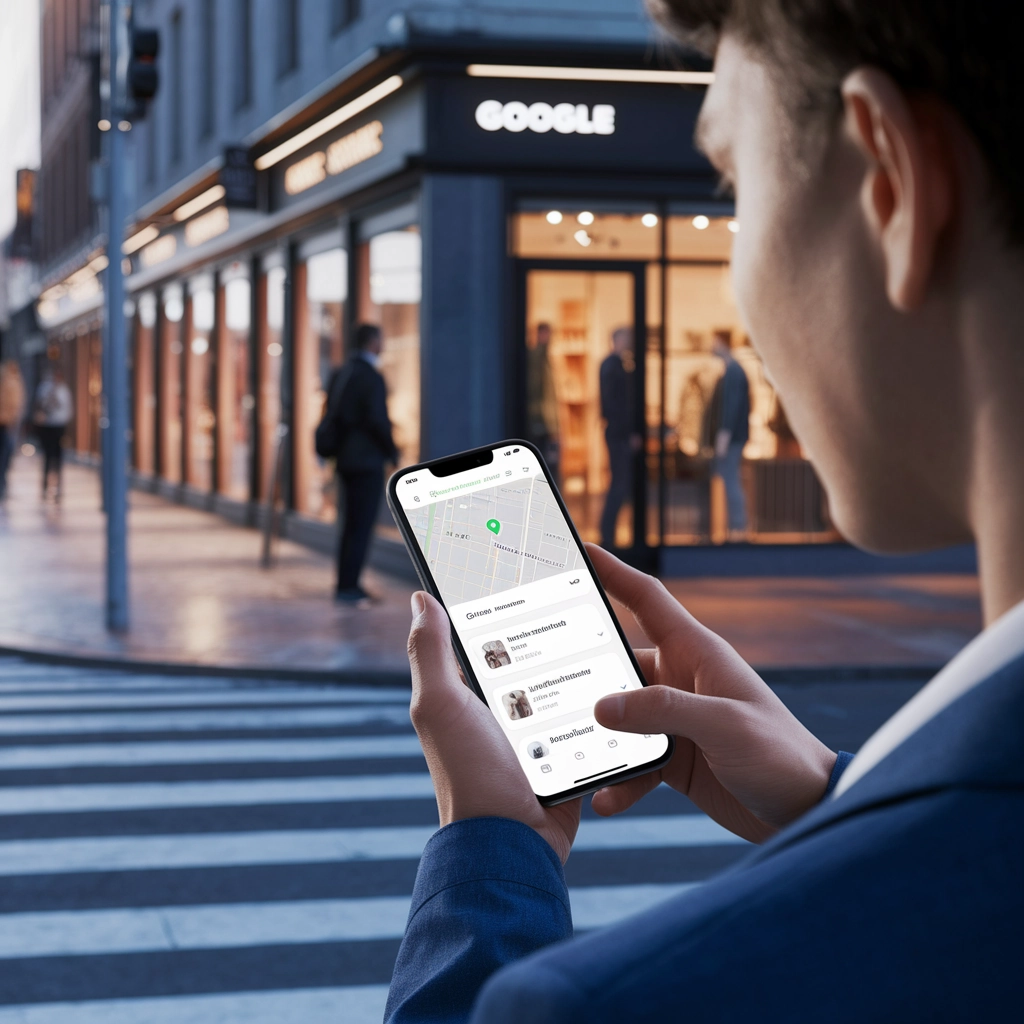
Google’s mission has always been to provide the most relevant results to users. For queries with local intent, that means prioritizing nearby businesses and services. Far from diminishing local results, AI and machine learning have made Google smarter about understanding when a user needs local information.
Consider these search behaviors that trigger local results:
- Explicit local searches: “coffee shops in Miami” or “New Jersey plumbers”
- Implicit local searches: “coffee shops” or “plumbers” (Google uses your location)
- “Near me” searches: “restaurants near me” or “gas stations near me”
- Product + location searches: “iPhone repair South Florida”
Google’s algorithms have become increasingly sophisticated at identifying local intent even when location qualifiers aren’t explicitly stated. This intelligence makes local SEO more important, not less.
The Local SEO Trifecta: Relevance, Proximity, Prominence
Google evaluates local businesses through three primary lenses:
Relevance: How well does your business match what the searcher is looking for?
Proximity: How close is your business to the searcher (or to the area specified in the search)?
Prominence: How well known and reputable is your business?
While AI has transformed how Google evaluates these factors, the fundamentals remain unchanged. Your business still needs to demonstrate relevance to specific searches, optimize for your physical location, and build prominence through citations, links, and reviews.
Google Business Profile: Still Your Most Powerful Local Tool
In 2025, your Google Business Profile (formerly Google My Business) remains the cornerstone of local SEO. This free tool allows businesses to manage their presence across Google Search and Maps the primary channels for local discovery.
The profile has evolved significantly over the years, now offering:
- Enhanced photo and video capabilities
- Direct messaging with customers
- Built in appointment booking
- Product catalogs and menus
- Q&A features
- Review management
- Posts and updates
Businesses that fully leverage these features see 70% more clicks to their websites and 42% more requests for directions compared to those with basic listings.
At Mixed Media Ventures, we’ve consistently seen that optimizing Google Business Profiles delivers one of the highest returns on investment (ROIs) for local businesses, particularly in competitive markets like South Florida and New Jersey.
The Review Revolution Continues
Consumer reliance on reviews has only intensified with time. Consider these statistics:
- 92% of consumers read online reviews before visiting a business
- 88% trust online reviews as much as personal recommendations
- The average consumer reads 10 reviews before feeling able to trust a business
What’s changed is how Google processes and prioritizes review content. Its natural language processing capabilities now better understand the sentiment and context within reviews, not just star ratings. This means the actual content of reviews impacts your visibility more than ever.
“Reviews have become a form of user generated content that search engines use to understand your business,” explains local search expert Tom Wilkins. “They’re looking beyond keywords to evaluate customer sentiment, which gives honest businesses a real advantage.”

The Rise of Hyperlocal Content Marketing
Content marketing for local businesses has evolved beyond simply mentioning your city in blog posts. Today’s successful local content strategies focus on:
- Neighborhood specific content: Creating pages or posts tailored to specific neighborhoods or districts within your service area
- Local event coverage: Publishing content about community events, especially those your business participates in
- Local partnerships and spotlights: Featuring other local businesses or organizations you collaborate with
- Locally relevant problem solving: Addressing issues specific to your geographic area
These approaches create relevance signals that automation can’t easily replicate, giving you an edge in local search results. Our SEO services team has found that businesses implementing hyperlocal content strategies typically see a 30 – 40% increase in relevant local traffic.
Mobile First Is Now Just Table Stakes
The shift to mobile first indexing is no longer news, but its implications for local search continue to evolve. Today, 84% of “near me” searches happen on mobile devices, and the user experience expectations have never been higher.
Local businesses must ensure:
- Lightning fast page load speeds (under 2 seconds)
- Mobile responsive design that works flawlessly on all devices
- Click to call functionality
- Easy to find directions
- Simple contact forms
- Location specific schema markup
Google increasingly factors these user experience elements into local rankings, using both field data from real users and lab data from automated testing.
Voice Search and Local: A Natural Partnership
Voice search and local queries go hand in hand. When people use voice assistants like Siri, Alexa, or Google Assistant, they’re often looking for nearby solutions:
- “Where’s the closest gas station?”
- “Find me a Thai restaurant that’s open now.”
- “Is there a hardware store near me?”
These natural language queries require a different optimization approach than traditional keyword targeting. Our voice AI specialists recommend focusing on:
- Question based content that answers common local queries
- Conversational language that matches how people actually speak
- Structured data that helps search engines understand your business details
- NAP (Name, Address, Phone) consistency across the web
The Automation Paradox: Why Human Touch Still Matters
Here’s where we find an interesting paradox: as automation becomes more prevalent in search and marketing, the human elements of your business become more valuable differentiators.
AI can help manage listings, monitor rankings, and even generate some content. But it can’t build authentic community relationships, create truly original local content, or provide the personal touch that turns customers into advocates.
“The businesses winning at local SEO today are using automation strategically while doubling down on the human elements that algorithms try to measure,” observes digital marketing consultant Rachel Lee. “They’re using technology to amplify authenticity, not replace it.”
This creates an opportunity for businesses willing to invest in both technological efficiency and genuine local connections.

Local Link Building: The Underrated SEO Powerhouse
While much attention goes to reviews and Google Business Profiles, local link building remains one of the most effective and challenging aspects of local SEO.
Local links from relevant community organizations, business partners, local media, and sponsorships send powerful signals to search engines about your local relevance and authority. These links are harder to automate or manipulate, making them increasingly valuable in Google’s algorithmic evaluations.
Effective local link building strategies include:
- Sponsoring local events and organizations
- Creating community resources that naturally attract links
- Participating in local business associations
- Seeking coverage in local publications
- Creating locally relevant, link worthy content
At Mixed Media Ventures, our lead generation team has found that quality local links often deliver both direct referral traffic and improved search visibility a double benefit that makes them worth the effort.
Measuring Local SEO Success Beyond Rankings
Traditional SEO often focuses heavily on keyword rankings, but local SEO requires a broader perspective. Successful local campaigns should track:
- Google Business Profile insights: Views, clicks, calls, and direction requests
- Local pack appearances: Frequency of appearing in the map pack for target queries
- Conversion actions: Calls, form submissions, direction requests, and actual visits
- Review velocity and sentiment: Rate of new reviews and overall sentiment trends
- Citation accuracy: Consistency of business information across the web
- Local visibility by neighborhood: Performance in specific parts of your service area
These metrics provide a more holistic view of local performance than rankings alone ever could.
Preparing for the Future of Local Search
While local SEO fundamentals remain important, forward thinking businesses should also prepare for emerging trends:
- Augmented reality integration: AR experiences tied to physical locations
- Local search personalization: Results tailored to individual search histories and preferences
- Visual search for local discovery: Using images rather than text to find local businesses
- Integration with smart cities infrastructure: Local search connecting with municipal data
- Expanded local shopping features: Enhanced e commerce capabilities within local platforms
These developments will create new opportunities for businesses that stay ahead of the curve.
Local SEO Is Evolving, Not Disappearing
The rise of AI and automation hasn’t diminished the importance of local SEO; it has transformed how we approach it. Today’s successful local strategy embraces technological tools while recognizing that the fundamental human desire for local connections remains unchanged.
As the digital landscape continues to evolve, local businesses that adapt their SEO strategies to leverage both technological advances and authentic local relationships will gain a significant competitive advantage.
At Mixed Media Ventures, we’ve helped hundreds of local businesses navigate these changes while maintaining strong local visibility. Our approach combines data driven competitive analysis with strategic implementation that acknowledges both the science and art of local marketing.
Ready to ensure your business stands out in local search results, even as technology continues to advance? Contact us today for a local SEO audit that will identify your biggest opportunities for growth in today’s AI enhanced landscape.
Remember: proximity still matters, reviews still influence decisions, and local customers still drive business success no matter how smart the algorithms become.