The Marketing Time Crunch Is Real
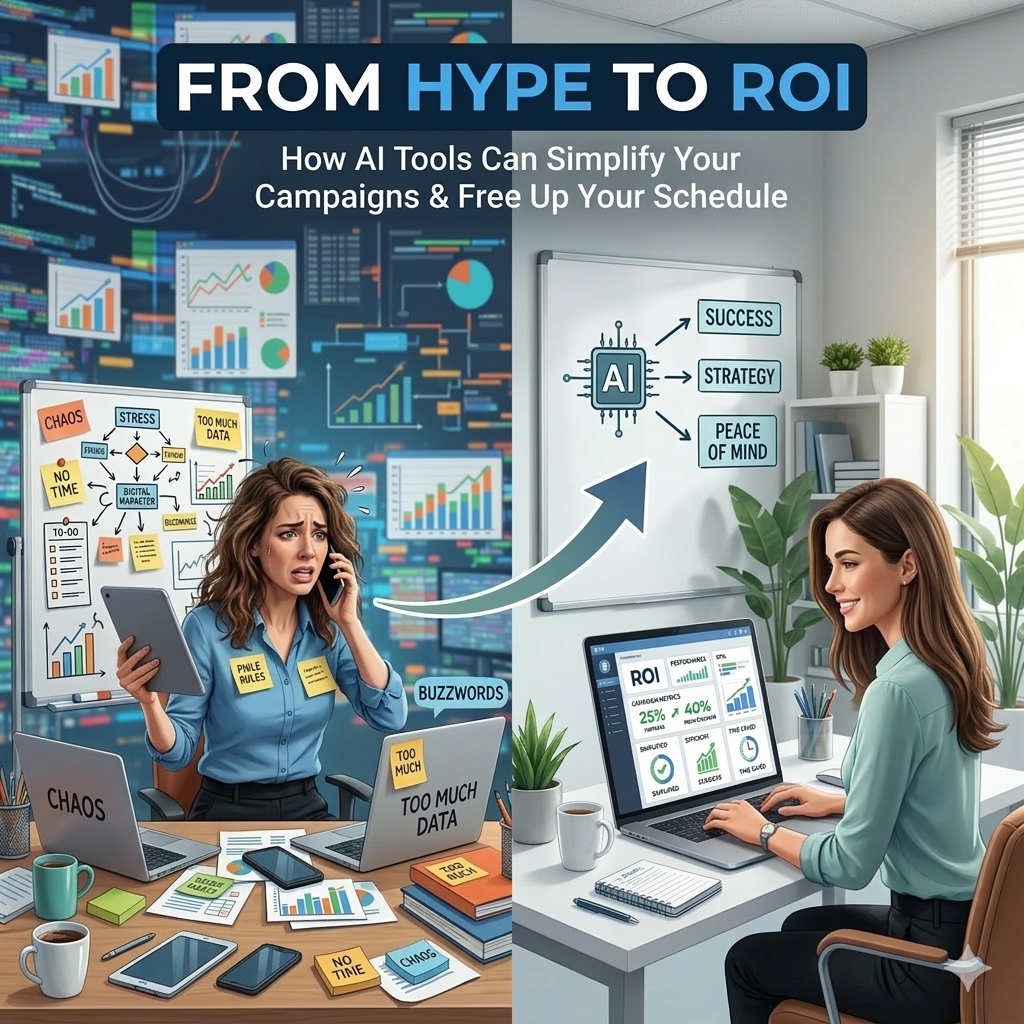
Let’s face it marketing has never been more complex. Between managing multiple platforms, creating personalized content, analyzing mountains of data, and staying ahead of ever changing algorithms, it’s easy to feel overwhelmed. A recent study found that marketers spend over 16 hours per week on routine tasks that could be automated. That’s nearly half a workweek lost to busywork.
The promise of AI tools has been ringing in our ears for years now. “Work smarter, not harder!” they say. But separating genuine productivity boosters from overhyped tech can feel like another full time job. As the president of Mixed Media Ventures, I’ve tested dozens of AI marketing tools over the past few years, separating the game changers from the time wasters.
The good news? We’re finally at the point where AI marketing tools deliver measurable ROI not just flashy demos. This isn’t about replacing your marketing team; it’s about supercharging their capabilities and freeing them to focus on what humans do best: strategy, creativity, and meaningful customer connections.
Beyond the Buzzwords: What Marketing AI Actually Does
Before diving into specific applications, let’s clarify what we mean by AI in marketing. These tools use machine learning algorithms to:
- Recognize patterns in customer behavior and market trends
- Automate repetitive tasks that follow predictable rules
- Generate and optimize content across channels
- Predict outcomes based on historical data
- Personalize experiences for individual customers at scale
“AI isn’t just another marketing tool it’s fundamentally changing how we approach campaigns by turning impossible tasks into everyday workflows,” notes Anna Martinez, Chief Digital Officer at Nexus Marketing. “Teams that leverage it effectively are essentially working with marketing superpowers.”
The key difference between today’s AI tools and previous automation is adaptability. Modern AI marketing solutions learn and improve over time, adjusting to new data rather than simply following static rules.
Seven Ways AI Tools Transform Marketing Operations
1. Content Creation and Optimization
Content creation remains one of the biggest time drains for marketing teams. AI tools now help at every stage:
- Research and ideation: Analyzing trending topics and identifying content gaps
- Writing assistance: Drafting blog posts, email copy, and social media content
- Optimization: Suggesting improvements for SEO, readability, and engagement
- Repurposing: Transforming existing content into new formats (blog to social, long form to email series)
For example, tools like HubSpot’s Campaign Assistant can generate landing page copy, marketing emails, and ad copy while maintaining brand voice. This ensures consistency across channels while reducing production time by up to 70%.
At Mixed Media Ventures, we’ve integrated AI writing assistants into our content workflow, allowing us to produce comprehensive guides and case studies in half the time. The key is having human editors review and enhance the AI generated content, adding expertise and personality that pure automation still can’t match.
2. Customer Journey Mapping and Personalization
Understanding the customer journey used to require months of research and guesswork. Now, AI tools can:
- Map actual customer paths through your digital properties
- Identify friction points and drop off triggers
- Suggest personalized content and offers based on behavior
- Predict next best actions for specific customer segments
“The difference between generic marketing and AI powered personalization is the difference between shouting in a crowded room and having a personal conversation,” says Mark Chen, personalization expert at Data Drive. “Our clients routinely see 30 40% higher conversion rates with intelligent personalization.”

AI tools now enable what we call “precision marketing” delivering exactly the right message to the right person at the right time. This dramatically increases efficiency by focusing resources where they’ll have the greatest impact.
3. Advanced Analytics and Attribution
Data analysis is perhaps where AI shines brightest in marketing. Traditional analytics requires manually digging through reports and spreadsheets to extract insights. AI powered analytics:
- Automatically surfaces anomalies and opportunities
- Provides plain language interpretations of complex data
- Attributes conversions across multiple touchpoints
- Suggests optimization moves based on performance patterns
Platforms like Windsor.ai offer multi touch attribution and real time analytics, helping marketers optimize ad spend and refine targeting strategies across channels. This eliminates hours of report analysis and provides actionable insights that might otherwise be missed.
At Mixed Media Ventures, we’ve seen how data driven marketing transforms campaign performance. One client increased ROAS by 43% after implementing AI powered attribution that revealed previously undervalued touchpoints in their customer journey.
4. Campaign Automation and Optimization
AI doesn’t just help you set up campaigns it actively improves them:
- Continuous optimization: Automatically adjusting bids, budgets, and targeting
- A/B testing at scale: Testing dozens of variables simultaneously
- Cross channel coordination: Ensuring consistent messaging and timing
- Predictive scheduling: Determining optimal posting times for maximum engagement
“Manual campaign management is like trying to tune a car engine while it’s running,” notes digital strategist James Wilson. “AI powered optimization handles thousands of micro adjustments that human marketers simply couldn’t manage in real time.”
For example, our PPC campaigns now utilize AI bid management that adjusts keyword bids throughout the day based on performance patterns, competitor activity, and even weather conditions factors too complex for manual management.
5. Conversational Marketing
AI powered chatbots and virtual assistants have evolved from frustrating novelties to genuinely helpful marketing tools:
- 24/7 lead qualification: Screening and scoring prospects
- Personalized recommendations: Suggesting products or content based on conversation
- Data collection: Gathering insights through natural conversation
- Seamless handoffs: Transferring qualified leads to human team members
Tools like Userbot.ai manage conversations at scale, analyzing customer tone and suggesting differential responses. This enhances customer satisfaction while dramatically reducing the time spent on routine inquiries.
One of our e commerce clients implemented an AI chat solution that now handles 76% of customer service inquiries without human intervention, while also generating 22% more qualified leads through proactive engagement.
6. Competitive Intelligence
Staying ahead of competitors traditionally required constant manual monitoring. AI tools now automate this process:
- Tracking competitor website and social media changes
- Analyzing pricing strategies and promotional patterns
- Identifying gaps in competitor content and SEO strategies
- Alerting you to emerging competitive threats
Web scraping tools like Browse AI can automatically monitor competitor websites for changes in pricing, messaging, and offerings. This provides an early warning system for competitive moves while eliminating hours of manual checking.
Our approach to competitive analysis now incorporates AI monitoring that tracks hundreds of data points across competitor digital properties, providing weekly insights reports without requiring constant manual research.
7. Voice and Visual Search Optimization
As search evolves beyond text, AI helps marketers adapt:
- Optimizing content for voice search queries
- Analyzing and tagging images for visual search
- Creating multimodal content that performs well across search types
- Testing and refining voice app interactions
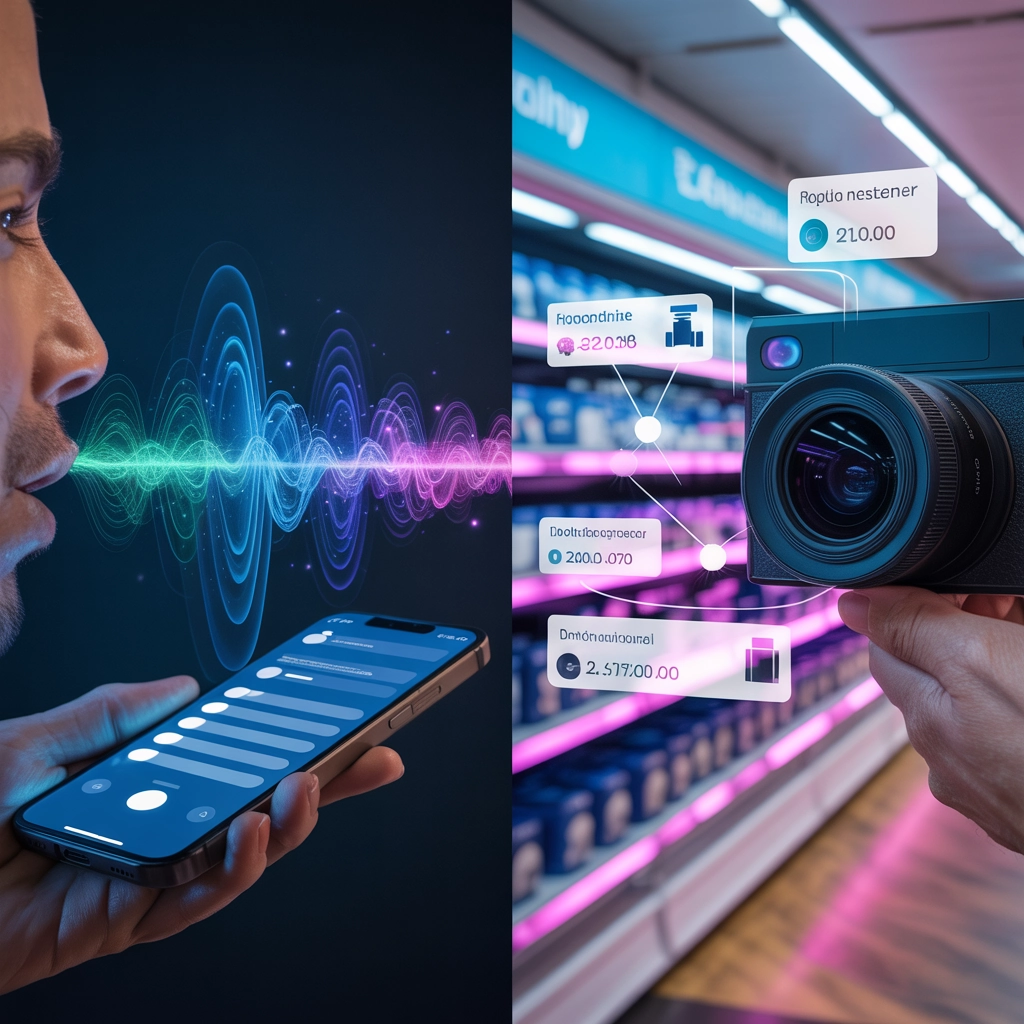
The rise of voice assistants and visual search requires entirely new optimization strategies. AI tools help identify voice search patterns and optimize content accordingly, ensuring your brand stays ahead in voice AI.
Implementation: Starting Small for Big Wins
The most common mistake when adopting AI marketing tools is trying to transform everything at once. Instead, follow this stepped approach:
- Identify your biggest time drains: Which marketing tasks consume disproportionate time relative to their impact?
- Start with standalone tools: Begin with single purpose AI tools that address specific pain points
- Measure time savings and outcome improvements: Track both efficiency gains and performance improvements
- Gradually integrate tools: As your team becomes comfortable, build toward an integrated AI marketing stack
- Upskill your team: Invest in training to help team members work effectively alongside AI
“The organizations seeing the greatest ROI from AI aren’t necessarily using the most advanced tools they’re the ones with clear objectives and methodical implementation,” explains digital transformation consultant Lisa Patel. “Start with quick wins that build confidence and momentum.”
Measuring the True ROI of Marketing AI
The return on investment from AI marketing tools comes in multiple forms:
Time Savings
- Reduced hours spent on routine tasks
- Faster campaign launches and iterations
- More rapid response to market changes
Performance Improvements
- Higher conversion rates through personalization
- Improved ad performance via continuous optimization
- Better content engagement through AI assisted creation
Strategic Advantages
- More time for creative and strategic thinking
- Enhanced ability to scale marketing operations
- Deeper competitive insights
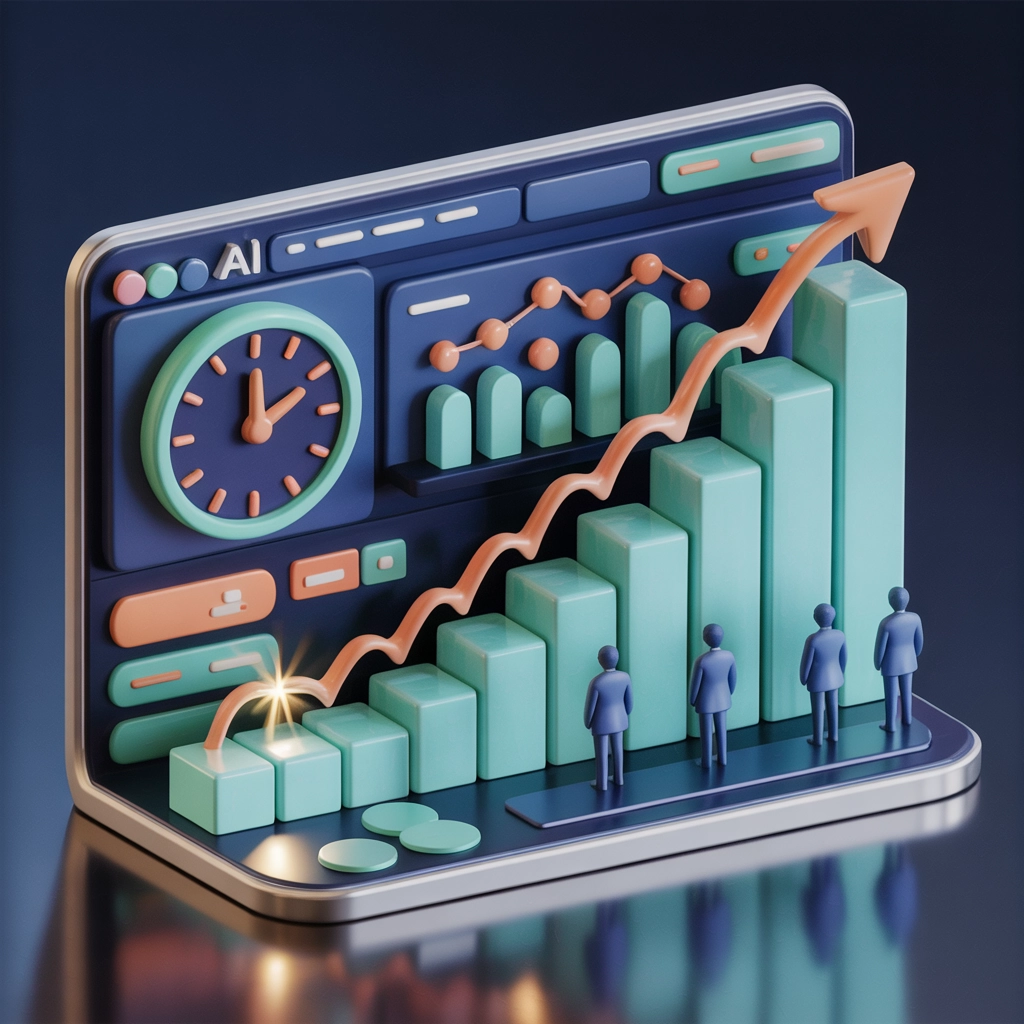
To properly calculate ROI, track both direct costs (tool subscriptions, implementation) and indirect benefits (time saved, performance improvements). One approach is to assign a value to marketing team time and include this in your calculations.
Challenges and Limitations to Consider
While AI marketing tools offer tremendous benefits, they come with important limitations:
- Quality oversight: AI generated content still requires human review and enhancement
- Integration complexity: Many tools don’t seamlessly connect with existing systems
- Learning curves: Team members need time to adapt to new AI powered workflows
- Data quality dependencies: AI tools are only as good as the data they’re trained on
- Privacy considerations: Ensure AI implementations comply with evolving privacy requirements
“The biggest mistake marketers make with AI is thinking of it as a ‘set it and forget it’ solution,” cautions marketing technologist Rahul Kapoor. “The most successful implementations maintain human oversight while leveraging AI for speed and scale.”
Beyond Today: Emerging AI Marketing Capabilities
As we look ahead, several promising developments are on the horizon:
- Multimodal AI: Tools that work seamlessly across text, image, audio, and video
- Predictive analytics: Moving from descriptive to truly predictive insights
- Autonomous campaigns: Self optimizing campaigns that require minimal human input
- Emotional intelligence: AI that better understands and responds to emotional context
- Cross platform coordination: Unified AI management across all marketing channels
These advancements will further reduce manual workloads while improving marketing effectiveness provided we implement them thoughtfully.
Key Takeaways: From Hype to Strategic Advantage
After implementing AI marketing tools with dozens of clients, we’ve learned that success depends on approaching AI as a strategic advantage rather than a shiny toy:
- Start with clear objectives: Define specific problems you want AI to solve
- Focus on augmentation, not replacement: Use AI to enhance human capabilities
- Prioritize integration: Choose tools that work with your existing tech stack
- Maintain the human touch: Preserve creativity and emotional intelligence in your marketing
- Measure comprehensively: Track both efficiency gains and performance improvements
The marketing landscape continues to grow more complex, but the right AI tools create simplicity from complexity. By automating routine tasks, surfacing actionable insights, and enabling personalization at scale, these tools free your team to focus on strategy and creativity the aspects of marketing where humans still outshine machines.
Ready to move beyond the AI hype cycle and implement tools that deliver genuine ROI? Contact Mixed Media Ventures for a personalized assessment of how AI can transform your marketing operations and free up your schedule for what matters most.