Google local service ads management is the strategic process of configuring, optimizing, and maintaining Google Local Services Ads (LSA) campaigns to generate verified call and message leads for service providers. Unlike pay-per-click advertising, this management approach focuses on pay-per-lead oversight, active lead disputes, profile responsiveness, and credential verification to maximize customer appointments and marketing return on investment.
What Is Google Local Service Ads Management and How Does It Work?
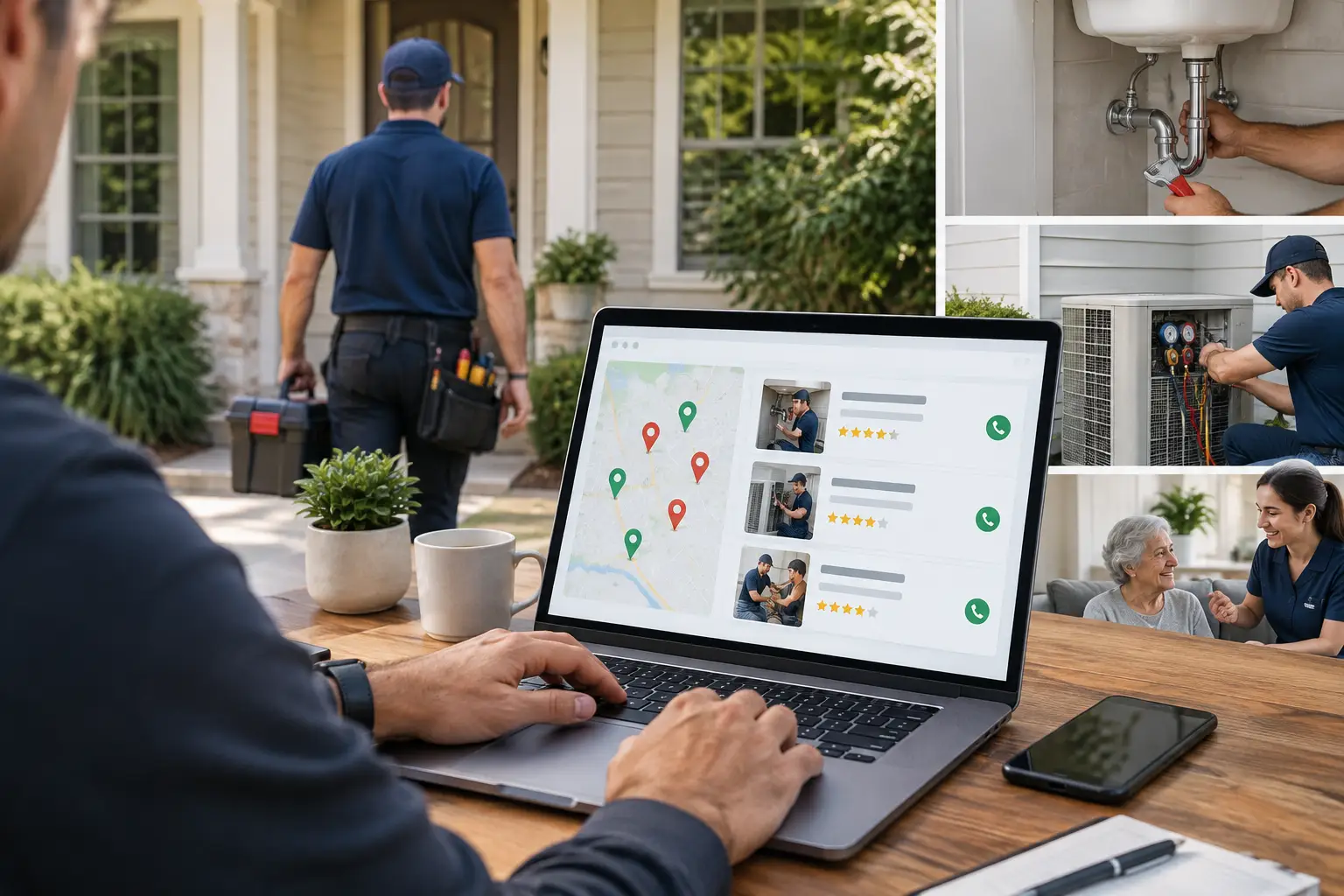
Google local service ads management provides home service companies with a managed system to capture high-intent service inquiries directly at the very top of Google search results. Local Services Ads appear above standard pay-per-click text ads and organic map packs. When a homeowner searches for urgent plumbing, electrical, or HVAC assistance, LSA displays direct contact details, business review ratings, operating hours, and official verification badges. Because advertisers pay only when a prospect contacts the business directly rather than when someone clicks a link, managing this channel requires specialized campaign oversight to convert incoming inquiry calls into booked customer visits.
The operational workflow of LSA relies on three core elements: service category selection, geographic targeting by zip code, and rigorous business background checks. Mixed Media Ventures helps growing companies navigate compliance verification, license submission, and general liability insurance validation to secure necessary trust badges from Google. Once approved and active, the advertising platform routes direct phone calls or message requests from qualified homeowners. Ongoing campaign oversight ensures that phone response rates remain high, business operating schedules match field availability, and active weekly budgets align with incoming call demand.
Effective management extends beyond basic profile creation to encompass real-time lead tracking and dispatch alignment. When local callers reach a service company, prompt call answering directly affects subsequent ad placement. Google evaluates response speed, call duration, and review velocity when deciding which service providers earn top carousel placement in search results. Implementing dedicated google ads campaign management connects inbound call flows with internal customer management tools, ensuring no qualified inquiry is missed during peak call hours.
Key Differences Between Local Services Ads and Traditional Google Search Ads
Understanding the operational distinctions between LSA and traditional Search Ads is essential for home service leaders structuring their digital marketing budgets. Traditional Google Search Ads operate on a pay-per-click model where advertisers pay whenever a user clicks a headline link to visit an external web page. In contrast, Local Services Ads charge businesses only when a potential customer calls or messages directly through the ad unit. Evaluating these two paid acquisition channels often requires reviewing seo vs ppc dynamics to determine how instant pay-per-lead channels complement long-term search engine performance.
Targeting mechanisms also differ fundamentally between the two advertising formats. Traditional Search Ads rely heavily on explicit keyword research, written ad copy variations, match types, negative keyword lists, and custom landing page designs. Local Services Ads rely primarily on selected service categories, targeted geographic zip codes, customer review scores, and profile completeness. Rather than bidding on specific long-tail keyword strings, LSA campaigns use Google search matching algorithms to display business profiles when user queries match configured service offerings.
The conversion path varies significantly between formats as well. Traditional Search Ads guide web searchers through external landing pages where online form submissions, live chat tools, or call tracking numbers collect contact details. Local Services Ads establish direct communication through native phone calls or message prompts, eliminating landing page friction entirely. Combining both ad formats within a comprehensive google ads ppc management campaign enables service providers to dominate top-of-page real estate across both pay-per-lead and pay-per-click formats simultaneously.
What Cost-Per-Lead Should Home Services Businesses Expect from LSA?
Cost-per-lead in Local Services Ads varies based on trade category, regional market density, local competition, and seasonal demand patterns. Standard cost-per-lead rates for home service providers typically range from modest investments for general cleaning or handyman calls to higher ranges for specialized trade inquiries like electrical panel upgrades, main line plumbing repairs, or full heating and cooling system installations. Because Google sets baseline lead prices per industry and market region, managing overall acquisition efficiency depends on converting inquiries into completed appointments.
Specialized trade categories experience distinct pricing dynamics based on emergency urgency and average contract value. For instance, structured plumber marketing programs often see varied lead costs depending on whether incoming calls target routine drain cleaning or complex emergency line replacements. Similarly, comprehensive hvac digital marketing strategies utilize LSA to capture high-intent seasonal service calls during extreme summer heat waves or winter freezes, where higher call volumes justify scaled advertising budgets.
Managing target lead costs involves continuously auditing incoming lead quality and maintaining strict geographic targeting parameters. Businesses operating in high-density metropolitan markets naturally face higher lead costs than those operating in smaller suburban territories. However, because LSA permits lead disputation for invalid contacts, the effective net cost-per-lead can be controlled through disciplined daily lead auditing and prompt dispute submission through the dashboard interface.
Profile Optimization Strategies for Higher LSA Search Rankings
Achieving top carousel rankings in Local Services Ads requires systematic optimization of key ranking signals evaluated by Google algorithms. Profile completeness is the foundational requirement; service providers must list every supported service subcategory, exact operational hours, specified service zip codes, and upload professional photos featuring teams, branded vehicles, and completed projects. Structuring profiles with accurate, comprehensive details builds immediate credibility with local homeowners reviewing options.
Review generation and overall review sentiment represent critical ranking drivers in LSA search positioning. Google prioritizes service businesses that maintain strong star ratings and a consistent volume of recent customer feedback. Implementing automated post-service review request workflows ensures a continuous influx of verified customer reviews. Responding promptly to both positive feedback and constructive reviews demonstrates active management, which positively influences profile exposure in competitive local auctions.
Responsiveness and phone answering efficiency directly impact auction competitive positioning. Google tracks whether incoming phone calls are answered live, missed, or sent to voicemail, as well as how quickly text message inquiries receive a response. Maintaining a high phone answer rate during published operating hours signals to Google that the company is available and prepared to accept new customer requests. Utilizing dedicated call handling or weekend dispatch workflows prevents missed calls from lowering profile ranking metrics.
Proactive Lead Dispute Management and Verification Protocols
A major financial advantage of Google Local Services Ads is the capability to dispute invalid leads and receive account credits for inquiries that fail to meet Google qualified lead criteria. Valid grounds for lead disputes include calls originated from outside configured service zip codes, requests for unlisted services, wrong phone numbers, automated pre-recorded spam, or commercial vendor solicitations. Establishing a structured daily lead auditing protocol ensures ad budgets remain allocated strictly toward valid customer leads.
Dedicated agency management plays a vital role in reviewing call logs and submitting formal disputes within allowed timeframes. Systematic LSA oversight involves listening to call recordings, verifying geographic origin, evaluating conversation duration, and filing credit requests for non-qualifying calls. Promptly flagging mismatched inquiries protects monthly marketing spend and lowers net customer acquisition costs over continuous billing cycles.
Maintaining active verification credentials requires ongoing compliance tracking. Background check documentation for field technicians, state business licensing updates, and annual general liability insurance renewals must remain current within the management portal. Allowing credentials or coverage documentation to lapse results in immediate profile pauses or removal of trust badges. Professional agency oversight prevents campaign interruptions by monitoring and updating credential renewal dates well in advance.
Scaling Home Service Revenue with Integrated Google Ads Management Services
While Local Services Ads deliver high-intent phone inquiries, scaling a growing home service enterprise across the United States requires an integrated paid search ecosystem. Combining LSA with standard Search Ads, retargeting campaigns, and local organic search optimization creates dominant visibility across search engine results pages. Professional google ads management services align budget distribution across multiple formats based on real-time service capacity, seasonal call trends, and target acquisition metrics.
Strategic budget management shifts ad spend dynamically depending on incoming call volume and operational availability. When LSA call volume surges during peak weather events, account managers can expand weekly spend caps or widen service zip codes to capture maximum market share. Conversely, during off-peak windows, ad budget can be reallocated toward traditional Search Ads targeting specific high-margin replacement or maintenance service categories.
By monitoring lead quality, optimizing profile signals, managing active lead disputes, and integrating multi-channel ad strategies, growing home service companies build reliable lead generation systems that support consistent revenue expansion and long-term business equity.