On the Go? Listen to the Podcast Here.
The Data Privacy Landscape Is Changing. Is Your Business Ready?
The digital marketing landscape is undergoing a seismic shift as we move through 2025. With 92% of Americans expressing concern about their online privacy but only 3% understanding current privacy laws, we’re witnessing a perfect storm of consumer anxiety, regulatory expansion, and technological evolution.
For businesses operating in both B2B and B2C spaces, these changes aren’t just compliance hurdles; they represent a fundamental opportunity to differentiate through trust. At Mixed Media Ventures, we’re helping clients navigate this complex terrain by examining how emerging standards, such as MCP, ACP, and C2PA, are reshaping what ethical marketing looks like.
The New Privacy Paradigm: Regulations Expanding Globally
Privacy regulations are no longer confined to the GDPR and CCPA frameworks we grew accustomed to in the early 2020s. By 2025, we’re seeing a complex global patchwork:
- Eight U.S. state level privacy laws are now fully operational, with three more expected by 2026
- Major Asian economies, including India, Japan, and Sri Lanka, have implemented comprehensive data protection frameworks
- The EU’s AI Act has moved from theoretical to practical implementation, with substantial implications for marketing technology
“The era of collecting data simply because you can is decidedly over,” notes Alexandra Reeve, Chief Privacy Officer at TechEthics Alliance. “Businesses now need clear purpose, transparent processes, and user control at every touchpoint, whether they’re marketing to consumers or other businesses.”
For digital marketers, this means learning a new vocabulary related to consent, legitimate interest, and data minimization principles. The companies succeeding in this environment are those turning compliance costs into trust building investments.
Understanding the Technical Frameworks: MCP, ACP, and C2PA
Three critical technical frameworks have emerged as cornerstones for ethical data practices and content authentication by 2025:
Media Credentials Protocol (MCP)
MCP represents a standardized approach to authenticating media content through embedded metadata that travels with digital assets. This protocol:
- Creates an unbroken chain of custody for digital content
- Provides verification of original sources and subsequent modifications
- Enables consumers and businesses to verify content authenticity
For marketers, MCP means that assets used in campaigns can carry tamper evident credentials, building trust through transparency about content origins.
Authenticity Credentials Protocol (ACP)
ACP extends authentication capabilities further by:
- Establishing a distributed verification system across platforms
- Creating standardized “nutrition labels” for digital content
- Enabling real time verification of marketing assets
B2B companies have been particularly quick to adopt ACP, as supply chain transparency and vendor trust have become competitive advantages in sectors from finance to manufacturing.
Coalition for Content Provenance and Authenticity (C2PA)
The C2PA has evolved from its origins in 2021 to become the dominant technical standard for content authentication by 2025. This open technical standard:
- Provides a unified approach to certifying content origins
- Creates machine readable content credentials
- Offers cross platform verification capabilities

“C2PA adoption has reached critical mass in 2025,” explains Dr. Mei Zhang, Digital Ethics Researcher at Stanford. “When major platforms implemented C2PA verification badges, consumer expectations permanently shifted. Now, businesses without content provenance systems appear inherently less trustworthy.”
AI Security Standards: The New Frontier
With generative AI becoming a cornerstone of marketing operations, new security standards have explicitly emerged for AI systems:
AI Content Labeling Requirements
By 2025, major markets, including the EU, California, and Canada, will require:
- Mandatory disclosure when AI generates marketing content
- Transparency about training data sources
- Human verification and accountability measures
These requirements apply whether you’re a B2C brand creating social media content or a B2B company producing thought leadership, making AI governance a universal concern.
Synthetic Media Verification Standards
The explosion of deepfakes and synthetic content has necessitated:
- Watermarking and fingerprinting of AI generated assets
- Blockchain based verification systems
- Developer accountability frameworks
For marketers, these standards mean implementing proper attribution systems and ensuring verification metadata remains intact across distribution channels.
The Trust Imperative: Beyond Compliance to Competitive Advantage
Forward thinking businesses are discovering that robust privacy practices deliver tangible business benefits:
- 60% of consumers now actively seek brands with strong data ethics
- B2B decision makers rank vendor privacy practices among their top three selection criteria
- Customer acquisition costs are demonstrably lower for brands with transparent data practices
This shift represents a fundamental change in how businesses view privacy investments, from cost centers to revenue drivers.
Practical Implementation: Building Your Privacy First Marketing Strategy
For B2B Organizations
- Implement Privacy Enhancing Technologies (PETs)
Over 60% of large enterprises now use at least one PET solution. These technologies enable sophisticated data analysis while protecting individual privacy. Consider:
- Homomorphic encryption for client data analysis
- Federated learning systems for collaborative insights
- Differential privacy tools for aggregate reporting
- Develop Clear Data Transfer Agreements
With cross border data flows increasingly restricted, implement:
- Standardized data processing agreements
- Geographic data residency options
- Transparent subprocessor documentation
- Build Content Provenance Systems
For thought leadership and marketing assets:
- Implement C2PA standards across your content supply chain
- Create verification portals for prospects to authenticate materials
- Train teams on proper attribution and modification documentation
For B2C Organizations
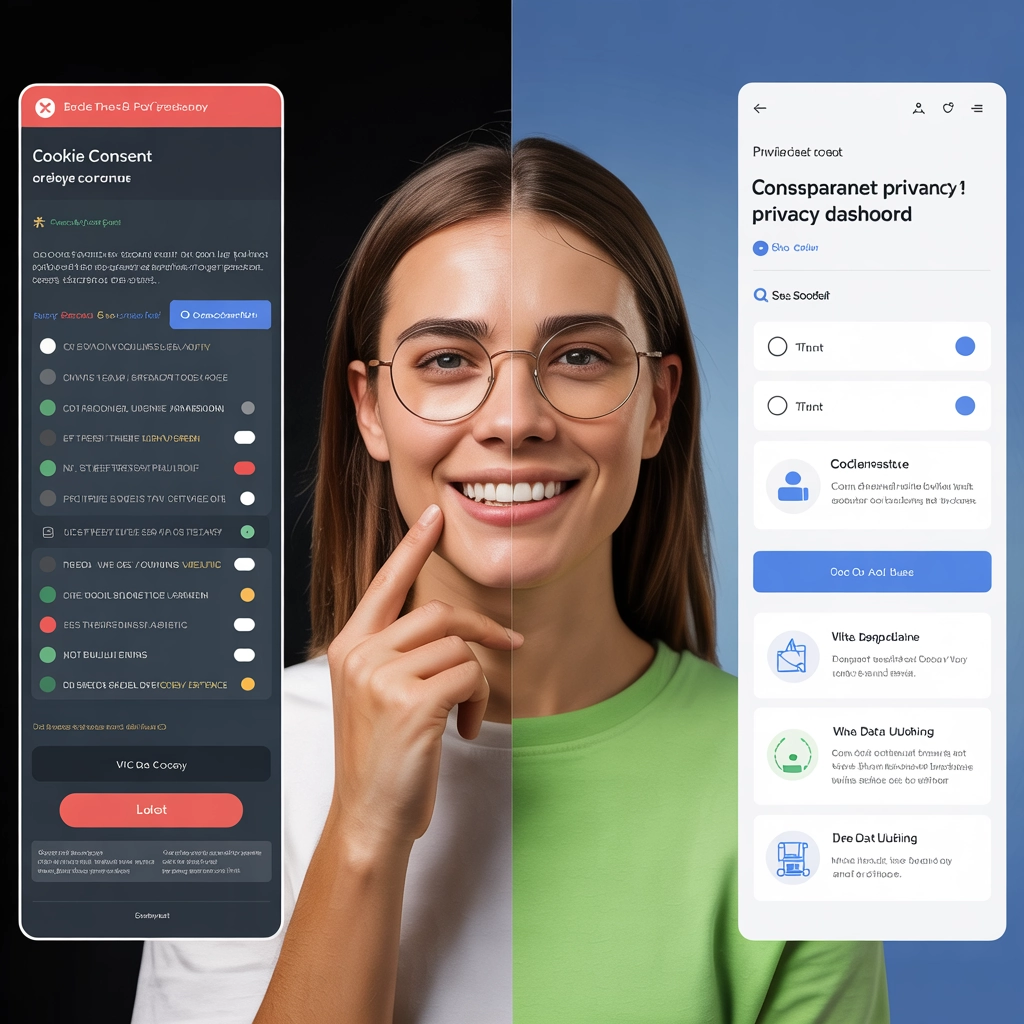
- Redesign Consent Mechanisms
Move beyond checkbox compliance to meaningful choice:
- Implement tiered consent options
- Provide clear value exchanges for data sharing
- Create intuitive privacy dashboards
- Adopt Authenticated Advertising Frameworks
With third party cookies fully deprecated by 2025:
- Implement first party data strategies with clear provenance
- Use authenticated advertising frameworks with transparent data practices
- Provide consumer facing verification tools
- Create Data Rights Portals
Make privacy a feature, not just a legal requirement:
- Develop user friendly interfaces for data access and deletion
- Implement preference centers that actually remember preferences
- Provide transparency reports on data usage
“The businesses thriving in 2025’s privacy landscape are those who stopped viewing compliance as a burden and started seeing it as a brand differentiator,” notes Chris Alvarez, CMO at Trust Technologies. “When your privacy practices become a marketing advantage, you’ve truly transformed your approach.”
The Generative AI Challenge: Ethics and Authentication
Generative AI presents unique challenges at the intersection of privacy, authenticity, and ethics. By 2025, best practices include:
- Provenance Tracking: Implementing end to end tracking of AI contributions to marketing assets
- Training Transparency: Documenting and disclosing training data sources for custom AI models
- Human Oversight: Maintaining clear accountability structures for AI assisted marketing
“We’re seeing a ‘trust premium’ emerge for companies that can verify their AI practices meet ethical standards,” explains Dr. Zhang. “This is particularly important in B2B relationships, where vendor trust directly impacts downstream customer relationships.”

Preparing for 2026: The Next Horizon
Looking ahead to 2026, we can already see emerging trends that will further reshape privacy and marketing:
- Neural Privacy will become a mainstream concern as brain computer interfaces and emotion detection technologies enter the marketing stack
- Decentralized Identity Systems will challenge traditional data collection models
- Algorithm Auditing will become a standard practice for marketing technology vendors
Organizations positioning themselves for success are already conducting privacy impact assessments on these emerging technologies and establishing ethical frameworks before deployment.
The Path Forward: From Compliance to Commitment
As we navigate the complex intersection of privacy regulation, technical standards, and consumer expectations in 2025 – 2026, the most successful organizations will be those that move beyond checkbox compliance to authentic commitment to data ethics.
For both B2B and B2C marketers, this means:
- Investing in technical infrastructure that enables both compliance and competitive advantage
- Training teams on emerging standards and ethical frameworks
- Communicating privacy values as core brand attributes
- Building verification systems that create transparency at every customer touchpoint
- Engaging with industry standards bodies like C2PA to help shape emerging frameworks
Taking Action Today
The privacy landscape of 2025 – 2026 wasn’t built overnight, and neither will your organization’s response be. Begin by:
- Auditing your current data practices against emerging standards
- Implementing C2PA compliance across your content creation workflow
- Reviewing AI governance structures and documentation
- Developing a privacy roadmap that anticipates regulatory changes
At Mixed Media Ventures, we help businesses navigate this complex landscape with strategies that turn privacy compliance into a market advantage. Our privacy first marketing approaches ensure that you’re not just meeting regulations, but also building lasting customer trust.
The future of marketing isn’t just about what data you can collect; it’s about what trust you can build. In the privacy conscious landscape of 2025 and beyond, that trust has become marketing’s most valuable currency.
Ready to transform your approach to data privacy and ethical marketing? Contact us to discover how your organization can turn privacy challenges into opportunities for deeper customer connection and market differentiation.