Quick Summary
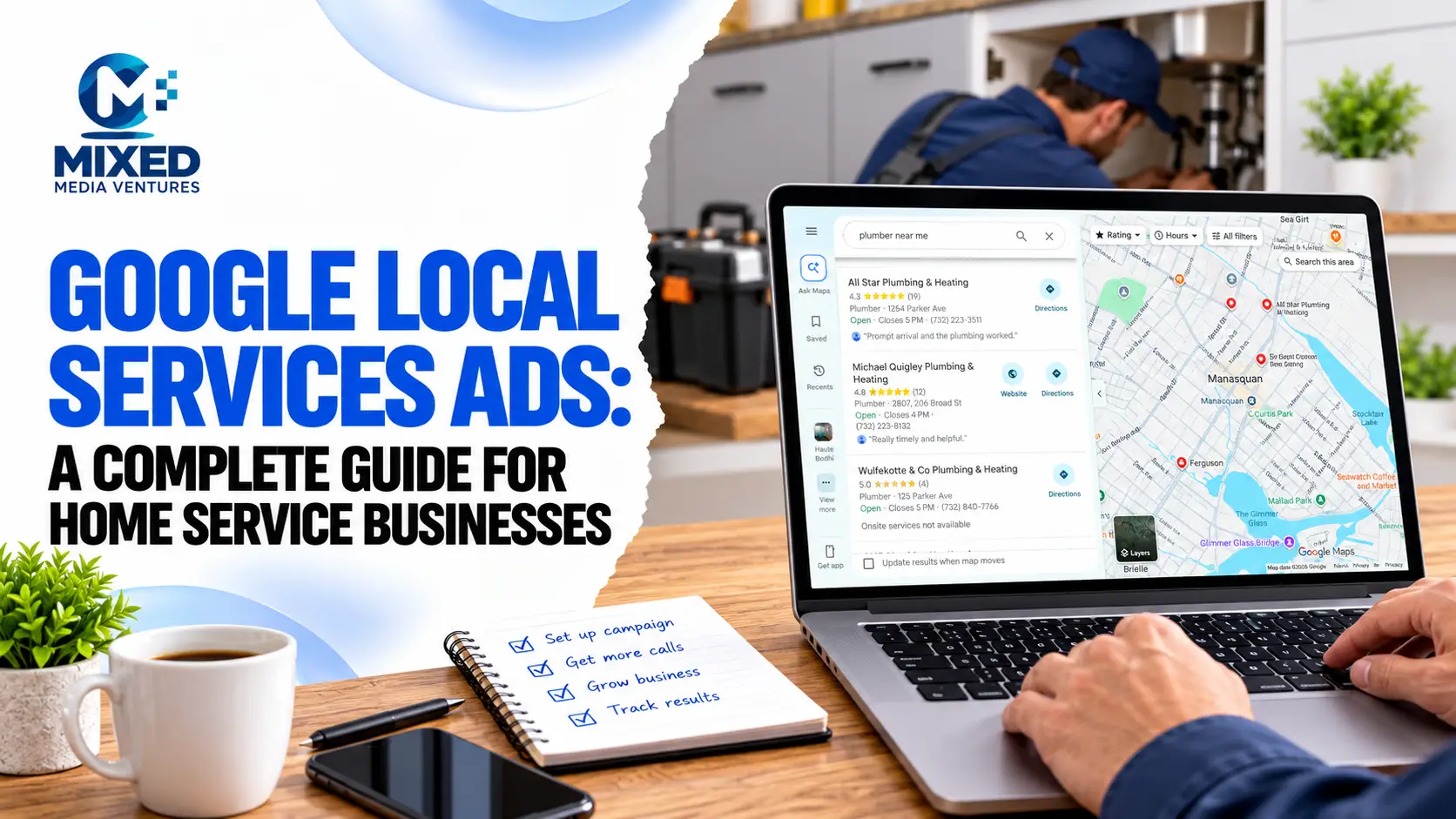
Google Local Services Ads are pay-per-lead listings that appear above regular Google Ads and organic results, connecting home service businesses directly with local customers who call or message straight from the search page. Unlike traditional pay-per-click advertising, a business only pays when a real lead comes through, which makes LSAs one of the more efficient ways for HVAC, plumbing, electrical, and roofing companies to win jobs in competitive local markets. Since October 2025, Google has also consolidated its old Google Guaranteed and Google Screened badges into a single Google Verified badge, a change that every home service business running local ads needs to understand before setting a budget or expecting the same trust signals shoppers saw a year ago.
Mixed Media Ventures has managed LSAs for home service businesses across New Jersey, New York, Las Vegas, and South Florida for more than 15 years, and this guide breaks down how the platform actually works today: eligibility, real cost ranges, the new verification system, setup steps, and the habits that separate businesses booking steady jobs from ones quietly overpaying for leads that never convert.
Why Home Service Businesses Are Paying Attention to Local Services Ads
A homeowner with a broken furnace in the middle of a New Jersey cold snap isn’t scrolling to page two of Google. They’re calling whichever business shows up first, has decent reviews, and answers the phone. That’s exactly the moment LSAs are built for.
Unlike a standard search ad that sends someone to a website, local ads let a customer call or message a business directly from the search results. For home service categories where speed to contact decides who gets the job, that shorter path matters. It’s also why more contractors are shifting budget toward LSAs instead of, or alongside, traditional pay-per-click campaigns.
What Are Google Local Services Ads?
Google Local Services Ads (LSAs) are a Google advertising product built specifically for service-based businesses, including home services, legal, and select professional categories. They appear at the very top of the search results, above both standard paid ads and organic listings, in a compact format that shows the business name, star rating, years in business, and a badge confirming the business has passed Google’s verification process.
Instead of clicking through to a website, a customer taps to call or send a message right from the search page. For home service businesses, this format tends to produce fewer wasted clicks than standard PPC, because the person reaching out has already seen the reviews, service area, and verification status before making contact.
How Local Services Ads Differ From Standard Google Ads (PPC)
The core difference comes down to pricing and intent.
| Local Services Ads | Standard Google Ads (PPC) | |
| Pricing model | Pay per verified lead | Pay per click |
| Placement | Top of page, above PPC | Below LSAs |
| Verification required | Yes, through Google’s screening process | No |
| Contact method | Call or message directly from the ad | Click through to a website |
| Dispute process | Leads can be disputed for credit | Clicks are not refundable |
With standard PPC, a business pays for every click, whether or not it turns into a real inquiry. With LSAs, the business pays only when a customer actually calls or sends a message. For home service categories with tight margins on lead cost, that difference adds up quickly.
Most established contractors don’t pick one over the other. Local Services Ads and PPC tend to work best running together, capturing both the top-of-page LSA placement and the broader keyword coverage a standard campaign provides further down the results.
Who Is Eligible for Local Services Ads?
Local Services Ads are limited to categories Google has approved for the program. Home services make up the largest group, and commonly include:
- HVAC contractors
- Plumbers
- Electricians
- Roofers
- Garage door repair companies
- Locksmiths
- Pest control companies
- House cleaning and carpet cleaning services
- Appliance repair companies
- Movers and junk removal companies
Availability and exact eligible categories vary somewhat by region, so it’s worth confirming current requirements directly through Google’s official Local Services Ads page before starting an application.
The Google Verified Badge: What Changed in 2025
For years, LSAs carried a mix of badges, including Google Guaranteed, Google Screened, and License Verified by Google, each signaling a slightly different level of screening. As of October 20, 2025, Google retired all of those separate labels in favor of a single Google Verified badge that covers every advertiser running LSAs.
A few practical points for home service businesses to know:
- The old Google Guaranteed money-back guarantee was discontinued alongside the badge consolidation.
- Businesses that had already completed verification did not need to reapply. The new badge was applied automatically.
- Customers now see one consistent trust signal rather than trying to interpret different badge types.
For a homeowner comparing three local services ads on a search page, the practical effect is simple: verification still matters, but it’s communicated more clearly than it was before. Businesses that haven’t completed their verification steps should treat this as a reason to prioritize it, since an unverified profile now stands out more, not less, next to fully verified competitors.
How Much Do Local Services Ads Cost?
Local Services Ads lead prices are not fixed. Costs can vary depending on your location, job type, lead type, and bidding mode. Before setting your budget, review how Google charges for Local Services Ads leads to understand how lead pricing and billing work. Emergency-driven categories like HVAC and plumbing tend to sit at the higher end, especially in dense metro markets.
Because pricing is based on leads rather than clicks, a business generally isn’t paying for accidental taps or unqualified traffic the way it can with standard PPC. That said, a low cost per lead only matters if those leads are actually converting into paying customers, which is why tracking lead-to-booked-job conversion matters just as much as the ad spend itself.
How to Set Up Local Services Ads
1. Confirm Eligibility and Service Area
Check that the business category currently qualifies and define a realistic service radius. A service area that’s too broad often produces leads a business can’t realistically service, while one that’s too narrow limits volume.
2. Complete the Verification Process
Verification requirements vary by business category and location. Depending on the service, Google may require business registration details, licences, insurance documents, or background checks for relevant people. This step often takes the longest, so starting it early avoids delays before the ad can go live.
3. Build Out the Service List
LSAs match customer searches to the exact job types listed on a profile. An incomplete list can mean missing leads for services a business already performs.
4. Set a Realistic Weekly Budget
Base the budget on how many leads the team can actually follow up on and convert, not the maximum available spend. A budget that outpaces a team’s response capacity tends to lower overall conversion rates.
5. Launch and Monitor Lead Quality
Once live, review leads regularly. Anything that’s spam, a duplicate, or outside the defined service area and job type should be disputed promptly, since Google allows only a limited window to request credit.
Best Practices to Get More Leads From Local Services Ads
Respond Immediately
Google’s ranking system for local services ads factors in responsiveness. Businesses that answer calls and messages quickly tend to see more lead volume over time, on top of the obvious advantage of reaching the customer before a competitor does.
Google considers several factors when determining ad rankings, including relevance, responsiveness, and other profile-related signals. See Google’s guidance on Local Services Ads rankings for more details.
Build Reviews Consistently
Star rating and review count are visible directly in the ad. A steady flow of new reviews, rather than one large batch collected and never repeated, tends to perform better for both click-through rate and ranking.
Keep the Service List Current
Job types drive which searches trigger a business’s ad. Reviewing and updating the service list periodically helps avoid missing leads for services already offered but not listed.
Dispute Invalid Leads Every Week
Reviewing leads on a set schedule and disputing anything that doesn’t meet the criteria keeps the effective cost per valid lead lower. Businesses that skip this step routinely overpay for leads that should have been credited.
Track Leads Through to Revenue, Not Just Volume
The real measure of a local services ads campaign isn’t how many leads arrive. It’s how many turn into booked, paying jobs. Connecting LSA leads to a CRM built for home service businesses makes it possible to see which leads converted, which stalled, and where follow-up is breaking down. Mixed Media Ventures has covered this in more depth in our guide to choosing the right CRM for home service businesses, which pairs well with this guide for businesses running both lead generation and lead conversion through the same system.
Running Local Services Ads in Competitive Local Markets
Local services ads perform differently depending on the market, and the local context matters more than most advertising guides account for.
In dense metro areas like New York City, competition for HVAC, plumbing, and electrical categories is steep, and review volume tends to be the deciding factor between similarly ranked businesses. In New Jersey, seasonal spikes around storms and extreme temperatures drive sudden surges in LSA volume, which means budget flexibility matters more than a fixed monthly spend. In Las Vegas, extreme summer heat creates a predictable annual surge in HVAC-related searches, and businesses that plan their LSA budgets ahead of the season may be better prepared to respond to increased demand. Across South Florida, hurricane season creates similar demand swings for roofing and restoration categories.
Mixed Media Ventures has spent more than 15 years building marketing systems for home service businesses in exactly these markets, which is part of why local context, not just platform mechanics, shapes how we set up and manage local services ads for HVAC, plumbing, and roofing clients. The same locally grounded approach to building trust and review volume shows up across other service-based industries we work with, including our guide to senior living marketing strategies for census growth, where local reputation plays a similarly decisive role in a family’s decision.
Local Services Ads and SEO: Better Together
LSAs and organic local SEO aren’t competing strategies. LSAs capture the highest-intent, ready-to-call searches with minimal wasted spend, while strong local SEO builds the reviews, Google Business Profile activity, and website authority that make an LSA profile more competitive in the first place.
This is the model behind Mixed Media Ventures’ home services marketing programs, which combine digital marketing, LSA management, and CRM-driven follow-up into one connected system rather than treating each channel as a separate line item.
Conclusion: Are Local Services Ads Worth It in 2026?
For most home service businesses, LSAs remain one of the more efficient ways to generate high-intent local leads, especially now that the Google Verified badge has simplified how customers evaluate trust signals across competing ads. The pay-per-lead model reduces wasted spend compared to standard PPC, but results still depend on fast follow-up, an accurate service list, and a system for tracking which leads actually turn into booked revenue.
If your home service business is exploring LSA for the first time, or already running them without seeing consistent booked jobs, Mixed Media Ventures can review your current setup and show where leads are being won or lost, with no obligation attached.
FAQs
1. What are Google LSAs?
They’re pay-per-lead listings that appear at the top of Google search results for eligible service businesses, showing a Google Verified badge, star rating, and a direct call or message option.
2. How much do Local Ads cost?
Local Services Ads use a pay-per-lead pricing model. The cost varies by service category, location, lead type, and bidding mode. Check your Google Ads account for the pricing that applies to your business.
3. What replaced the Google Guarantee badge?
As of October 2025, Google replaced Google Guaranteed, Google Screened, and License Verified badges with a single Google Verified badge, and discontinued the associated money-back guarantee.
4. Who is eligible for local services ads?
Eligible categories include most home services, such as HVAC, plumbing, electrical, and roofing, along with select professional and personal service industries. Businesses must complete Google’s verification process.
5. Should I run local ads or standard Google Ads?
Most home service businesses benefit from running both. LSAs capture ready-to-call searches at the top of the page, while standard PPC allows broader keyword targeting further down the results.
6. Can a bad lead be disputed?
Yes. Leads that are spam, duplicates, or outside the defined service area and job type can be disputed for credit within Google’s allowed window.
7. How is ranking determined for local ads?
Google considers multiple factors when determining ad rankings. These can include the relevance of the search, responsiveness, and information in the business profile.
8. Do local ads work for newer businesses?
Yes, though newer businesses may need time to build the review volume that established competitors already have. Fast response times help offset a smaller review base early on.
9. How long does verification take?
Timelines vary based on documentation and background check processing, but it commonly takes anywhere from a few days to a few weeks.
10. What’s the most common mistake businesses make?
Setting a budget that generates more leads than the team can follow up on quickly. Since ranking rewards responsiveness, slow follow-up can lower both conversion rates and future lead volume.